The Difference Between a Senior Who Is Coping and One Receiving Genuine Companion Care
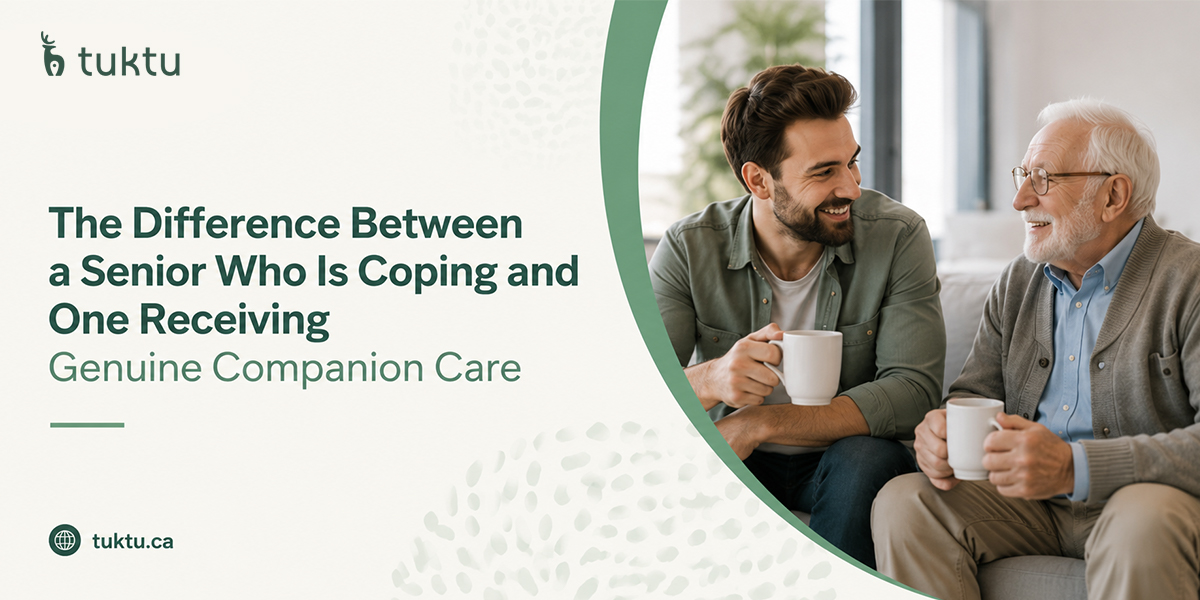
Coping and thriving are very different. A senior who is coping is just getting through the day. A senior receiving genuine senior companion care feels engaged, connected, and supported, which can improve both health and memory. The National Institute on Aging found that seniors who are socially isolated lose cognitive abilities much faster than those who stay engaged. The gap between coping and thriving is often bigger than families realize.
What Does Coping Actually Look Like in an Aging Adult?
From the outside, coping can look fine. The senior is dressed, the house is in order, and they answer the phone saying they are okay.
But on the inside, things are different. Meals are eaten alone every day. Days go by without any real conversation. Hobbies are quietly set aside. There is a slow withdrawal that often goes unnoticed because nothing dramatic has happened yet.
Coping is not a steady state. It is actually a slow decline that only looks stable until it suddenly isn’t.
What Does Consistent In-Home Support Actually Change for an Aging Adult?
Companion care for seniors changes what daily life feels like. It does not rely on medical treatments, but instead on steady human presence, which helps keep the mind active in ways that isolation cannot.
A 2021 study in PLOS ONE found that older adults who took part in regular social activities had better memory and lower rates of depression than those who did not. It was the social engagement itself that made the difference.
Real companion care offers this kind of engagement on a regular basis. It includes shared meals, meaningful conversations, walks, activities, and check-ins that happen on a schedule the senior can look forward to.
Why Does Anticipation Matter in Senior Wellbeing?
People often overlook how important anticipation is for seniors’ health. Simply knowing that someone will visit on Wednesday can make Tuesday feel different and more hopeful.
According to studies in behavioral psychology, anticipation improves mood, motivation, and mental activity among the elderly. An elderly person who knows his companion is coming at 10 a.m. on Thursday feels the benefit the night before.
This positive effect comes from regular scheduling. Irregular visits do not have the same impact.
How Does Cultural Matching Improve Care Outcomes?
The connection between a senior and their companion is key to a successful relationship. Language, cultural background, and shared experiences are just as important as any other factor.
The research shows that when care is culturally aligned, seniors are more involved, communicate better, and the arrangement lasts longer. The senior who can talk freely in his first language with his companion gets completely another type of care than the one who cannot do it.
When choosing a senior companion care provider, look for someone who matches your loved one’s language, background, and personal preferences, not just someone who is available.
Conclusion
There is a kind of aging that only looks okay, and another that truly is okay. This difference is not always obvious and often cannot be seen in a weekly phone call. If your parent is just coping and not really engaged in their days, it is worth closing that gap. Consistent, well-matched companion care for seniors is one of the best-supported ways to help. Starting early leads to better results than waiting until coping is no longer enough.


