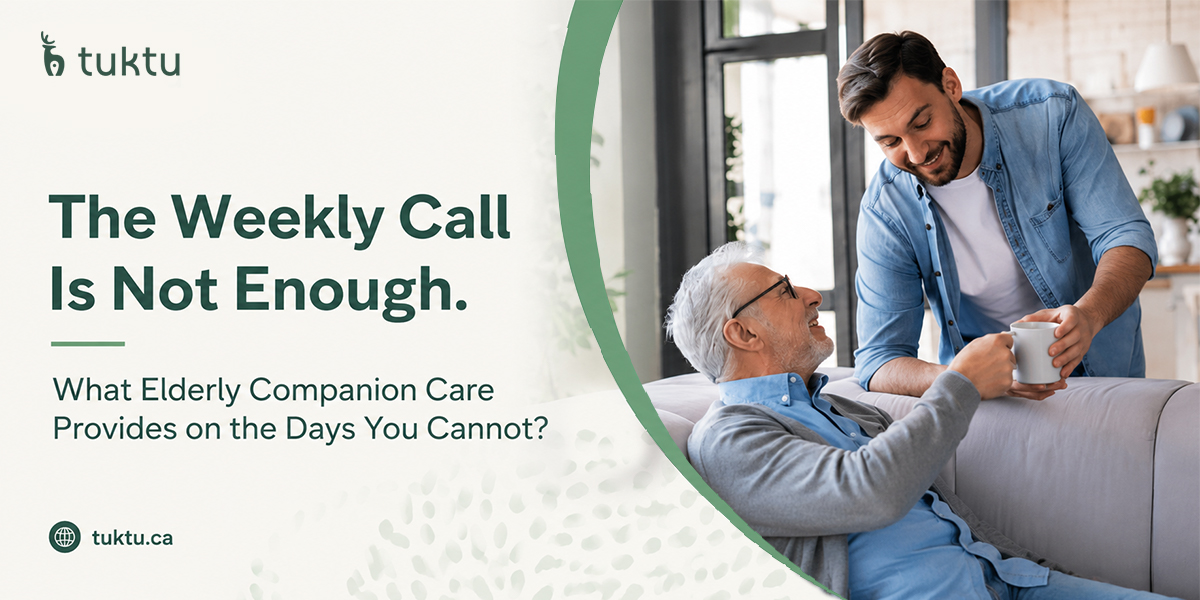
The Weekly Call Is Not Enough. What Elderly Companion Care Provides on the Days You Cannot?
A weekly phone call keeps you connected. It does not keep your parent well. Research from Brigham Young University found that social isolation increases the risk of premature death by 26 percent. For seniors living alone, the days between family contact are a measurable health risk that elderly companion care is specifically designed to address.
Why Does Loneliness Hurt Seniors More Than Families Realize?
Loneliness in older people is more than just an emotion. It is a genuine phenomenon that affects individuals' health.
Studies in the Journal of the American Medical Association show that ongoing social isolation leads to faster mental decline, more depression, and higher heart risks. When a senior goes several days without real human contact, it is not just about feeling sad. Their mind and body react in ways that a weekly call cannot fix.
Most seniors do not say they feel lonely. They often say they are fine and downplay their feelings. Isolation can build up quietly, and by the time you notice it, the harm may already be done.
What Does In-Home Companionship Provide That Phone Calls Cannot?
Companions for seniors are not medical caregivers. They do not handle medical tasks or manage health issues. Instead, they offer constant, meaningful company on the days when family cannot visit.
What companionship looks like depends on the senior. It could be sharing meals, talking, going for walks, playing cards, or just sitting together. Research shows that doing these things regularly matters more than the specific activity.
A 2020 study in The Lancet found that regular social interaction, even in simple ways, greatly lowers the risk of dementia in older adults. Being there on a regular basis is what makes the difference.
How Does Elderly Companion Care Support Daily Life?
Elderly companion care does more than support emotional health. It also helps with the daily routines that keep seniors safe at home.
In-home companions help with light cleaning, making meals, shopping, and regular check-ins. They notice when things change, like a drop in appetite, changes in movement, or if the home is not as tidy as usual.
These observations get to the family before a small issue turns into a big problem. This is something a weekly call cannot provide.
Why Does Consistency Matter More Than a Single Long Visit?
One long visit each week is not the same as two shorter visits spread out over the week. Research on aging shows that regular, spaced-out contact works better than having all the time together at once.
Seniors with regular social routines have positive moods, good sleep quality, and clearer thinking as compared to seniors with inconsistent schedules. It is important for the brain to know when visitors will come rather than only having the visitors themselves.
A companion who visits on Tuesday and Thursday does more for a senior's wellbeing than a Saturday visit that lasts twice as long. This is why arranging companions for seniors on a consistent weekly schedule produces better outcomes than occasional longer visits.
What Should Families Look for When Arranging Companion Support?
Finding the right match is just as important as the service itself. A companion who shares a senior's culture, speaks their language, and connects easily will make a bigger difference than someone who just arrives for the job.
Ensure that you choose companions who speak the same language as your parent, come from a similar background, and have a good personality. Look for companions who have been background-checked and are local. Find flexible care plans without long-term contracts, and services that can start small and grow as your parent's needs change.
Conclusion
If your parent is safe but alone, the weekly call helps, but it cannot do everything. Regular in-home companionship fills the gaps that phone calls miss. The daily routines and quiet times that affect how your parent feels and lives. If you are starting to think more support might help, it is better to act sooner than later.


